Friday, October 15, 2010

ingredient: LENTILS


Lentils are about as old as the pebbles they resemble. Yes, we are talking biblically old. Point in fact, in the Old Testament we see Esau sell his birthright to Jacob for a bowl of his lentils. Stupid? Perhaps. But it was probably thanks to all those lentils that Jacob was eating that he managed to supersede his older brother to lead the Israelites, wrestle an Angel and win, while managing two wives, two mistresses, and thirteen children. Jacob died at the ripe old age of 147. Esau got skewered by an arrow. I think I’ll have a bowl of lentils, please.


I’ll also eat lentils because they contain the third highest amount of protein by weight of any non-meat source (and while I’ll eat soy, I’ll save hemp for my fimo bead necklaces). Those little heart-shaped pulses also give me iron, folate, fiber, and B vitamins. These are all things people need, and, worth noting, all things that vegetarians have a hard time finding.


There are two countries which particularly know what’s up with lentils: India and France. In India, they typically serve lentils as dal, a stew-like dish that varies from region to region. A cup of spicy dal, either ladled over rice or mopped up with bread, is the perfect comfort food. And not that I need another reason to go the Indian restaurants on 6th street where your head is 2 inches from being strangled in a tangle of chili-pepper lights and they play an amped up Indian version of Happy Birthday when you tell them it’s your birthday (which you should always, ALWAYS do) and it’s byob so you can buy a six-pack of Kingfisher from the bodega across the street and drink them until the birthday song with its accompanying flashing lights is suddenly the greatest thing you’ve ever seen, but they also give you a free cup of dal with your meal. Ok, let’s just move there.


In France, people like to eat Puy lentils, an A.O.C pulse grown in the volcanic soils of (you guessed it) Puy. These small, dark green lentils are particularly great for cooking because they have a rich flavor and they hold their shape after boiling. While I was studying in Paris I ate a lot of lentil salad. Why? Because French lentil salad is served slightly warm, with a few nibbles of sweet carrots, and often some liquoricy fennel, and a garnish of earthy thyme. It’s clean-flavored and elegant yet rustic at the same time. Lentil salad is fairly ubiquitous on bistro menus and pairs perfectly with hot onion soup, a Galouise, and the belief that you’re being très chic.


Here in America, I've found that we like to eat our lentils in soup. While I would like to see some more lentil-thinking out of the box (like in desserts, another thing that Indian cuisine has mastered), I’m a big fan of lentil soup, especially on days that otherwise suck.


Lentil Soup "Off the Cuff"


Today I was at the doctor for four, count em, four hours. It was raining. I was in Murray Hill. Things were looking bleak. Walking is the only thing that makes me feel better, even in the rain, so I pushed on, reaching Madison Square Park just as the offices began to let out their beleaguered captives. It got darker, wetter.


Yet somehow by the time I reached the West Village, my mood began to change. The lights in the restaurants had turned on, casting little orbs of yellow onto the street. People were inside, having a glass of wine, eating undiscovered treasures, laughing over life’s ridiculousness ("Who greenlighted this?")


New York wears many hats: it likes to be trendy, or tough, or adventurous. I love it as all these things. But rarely is it cozy. Yet cozy was the only word to describe it. The rain gave the world just enough of a slicked over, muddled sheen, to obscure the leaves in the gutter and the bums in the doorways. I squelched home as fast as possible, ready to hop under the covers. Because that’s the thing about being cozy: it has to be uncomfortable to be outside for it to be exquisitely satisfying to be inside.


I met my next challenge when I got home. I wanted, no, needed, lentil soup. It was part of the fantasy I had concocted in my head on the way home, and for which I had specifically bought a bottle of Valpolicella, an Italian red from outside of Verona which is big enough to stand up to the rain. There was one problem; I didn’t have many of the typical ingredients for lentil soup. I poured over cookbooks, trolled the internet. It seemed I would have to wing it. But given my new found optimism, I was decidedly up for the challenge. I didn’t have celery. I didn’t have onions. So I diced up some garlic, shallots, and carrots. I call it my mire-pourquoi-pas. The result was quite lovely, a very lentil-y lentil soup. Perfect to keep out the chill and make you forget the M-Hill.


NB: You’ll see I added croutons to my lentil soup. Croutons on lentil soup, you say? Quel horreur! I know, it’s not normal, but this soup was about feeding a very specific hunger. And honestly, when it comes to bread, especially bread toasted and drizzled with olive oil, there’s really no reason to say no.


yield: Makes 1 large pot, enough for 6 or so people, depending on your course/the weather


Ingredients:

3 cloves of garlic, minced

3 shallots, diced

1 cup carrots, chopped

6 cups chicken broth, divided

3 cups green lentils, rinsed, drained

2 good sized tomatoes, chopped

1 tsp cumin

1 tsp hot pepper flakes

1 lemon ("optional")

¼ cup parsley, chopped

for croutons: 3 slices bread, preferably about 6 inches of a stale French baguette, if we’re being precise

olive oil

salt, pepper

Directions:


Preheat oven to 400 degrees

Heat four tablespoons of olive oil in a large pot over medium high heat. Add garlic, shallots, and carrots. Let the mire-pourquoi-pas cook for about 8 minutes, stirring occasionally, or until the shallots are translucent and the carrots are getting a little soft.


Add the lentils, 4 cups chicken broth, tomatoes, cumin, hot pepper flakes, 2 teaspoons salt and 1 teaspoon freshly ground black pepper.


Let the soup come to a boil, then reduce heat and cook until lentils are soft, about thirty-five to forty minutes. Unfortunately, with this soup, you can’t exactly walk away. Those lentils are thirsty little buggers and they’re going to start absorbing the broth. Add some of the remaining broth whenever it’s looking like the lentils have absorbed what’s there; in other words, keep it looking like a soup rather than just a bowl of lentils.


To keep yourself occupied while the soup is cooking, make the croutons. Cut the bread into 1 inch cubes. Arrange the cubes on a baking sheet and drizzle with olive oil and salt. Pop the bread in the oven for about 10 minutes, or until the croutons are golden brown. Take out and set aside.


Now I like my lentil soup to be a mix between the French and the Italian style. I don’t want all purée, nor do I simply want broth with lentils floating around. I think the best is a compromise. To achieve cultural harmony, take 2 cups of lentils and put them in the blender, purée them, and put them back in the soup pot. Or if you’re lucky like me, use your handy immersion blender to purée some of the soup right there in the pot.


To serve, ladle the soup into bowls. Over each bowl, squeeze some of the lemon and drizzle a bit of your best olive oil (if you’ve only got crap, ignore this step), and then scatter with parsley. Then float some of the croutons on top. I promise you, with this soup, the garnishes are the key. Don’t shy away!


ps. not to shill for myself, but you're already here so: read my ode to pumpkin (or just check out the other great stuff at Good. Food. Stories)

Wednesday, October 13, 2010

ingredient: RICOTTA


Some of the best things in life are byproducts of other great things. Molasses. Cracklins. Jeff Bridges. My personal favorite may be ricotta, a fresh and ebullient cheese made from whey, the byproduct of regular cheese production.

Ricotta has a lot of things going for it. First of all, the texture. It is downright pillowy. I’d like to emphasize here that much of the ricotta you buy in the store (as opposed to fresh ricotta) is not pillowy. It is gummy and almost grainy, because instead of draining the liquid out of the ricotta, they add stabilizers like guar gum (weak). So read on with the knowledge that I am talking about real, delicious, light-as-air ricotta made from adding acid to heated whey, then draining.

So thanks to its fluffy texture, ricotta is the perfect filling for pastas. There is nothing like biting through a nice layer of al dente pasta and meeting a soft, flavorful filling. And in cassata, that crazy, sweeter than sweet cake made by the Sicilians, who I applaud for being on a constant national sugar high, ricotta tops layers of sponge cake and candied citrus peel and sometimes even chocolate or vanilla icing. The filling is then soaked in fruit juice or more likely a liquor, and then this whole mess is covered with a marzipan shell and decorative fruit. The crunch of marzipan shell giving way to soft ricotta is my equivalent of the tap of the spoon on crème brulée. But whether you're Sicilian or French or anything in between, I think we can all agree: textural contrast is the shit.

The second great thing about ricotta is the flavor. Ricotta can easily be sweet (as in cannoli, as in cheesecakes, as in drizzle it with honey and eat it for breakfast because that’s clearly what they’re doing in heaven, where I’ve heard the clouds are made out of ricotta.) Or it can be savory (talking about lasagna, ravioli, calzone, or drizzled with olive oil and salt and eaten for breakfast because that’s clearly what they’re doing in hell, where everyone is hung-over and needs a nice little savory snack.) In short, ricotta is an enabler; it just wants to help you out. Need a little moisture in those muffins? Ricotta. Sick of topping that bruschetta with tomatoes? Ricotta.

Another great thing about ricotta is that you can easily make a version of it at home using milk and vinegar and feel like Alton Brown.


Regardless of whether you eat ricotta fresh, use it in cooking, or add it to baked goods, this is perhaps the friendliest of all cheeses. So grab a tub and play around; Alton would approve.

Ricotta and Spinach Gnudi
with the Simplest Tomato Sauce Ever


I have eaten a lot of ricotta in my lifetime because my Grammy’s specialty is manicotti. Or as she says, “manicot” which is filled with “rigot” (hard g). Yeah. Good though her manicot may be, I needed a change, a new ricotta recipe. Bring on the gnudi. Pronounced nude-y, like the state you’re in after someone convinces you that really, that’s what Italians do at the beach.

Gnudi are basically ricotta dumplings. Have you ever eaten ravioli where the filling was delicious but there just wasn't enough and the flavor was lost under the pasta wrapping? Well rejoice: these are just the inside of a raviolo, broken free of its shell. The spinach here adds flavor and body, but it also turns the dumplings green. Don’t be alarmed. Do serve them at Christmas with the red sauce and be the theme-queen. Zing.

Ingredients:

1 cup whole milk ricotta cheese
2 cups baby spinach, or regular spinach with stems discarded
1 cup grated Parmesan
2 eggs
2 egg yolks
1/2 teaspoon freshly grated nutmeg
1 teaspoon salt
1 teaspoon freshly ground black pepper
5 tablespoons all-purpose flour, plus 1 cup for coating

Directions:

*If you are making the tomato sauce as well, start that first (scroll down for recipe).*


Heat a medium skillet over medium high heat. Rinse off the spinach and then throw into the pan without drying it off. Stir the spinach until it has wilted down into a shockingly small pile. Place the spinach on a layer of paper towels or an old dishcloth and let it cool. Squeeze the spinach dry. A lot of liquid will come out. If you’ve ever made spanikopita you’ll know how important it is to get that spinach bone dry. If you leave liquid in your spinach, it will add too much moisture to the dumplings and they will fall apart and then you will be sad. Finely chop the spinach.

In a large bowl, mix the ricotta, spinach, Parmesan, eggs, and egg yolks. Then stir in the nutmeg, salt, pepper, and 5 tablespoons of flour. At this point, take a look at the dough. It should be sticky but definitely pliable. If it seems to wet or loose, add a little more flour. Put the dough in the fridge for 30 minutes.


Bring a large pot of water to a boil. Salt like the sea.

Take the dough out of fridge. Using either your hands or a spoon, or two spoons if you’re familiar with shaping quenelles, form mixture into small footballs, around 1.5 to two inches long.


Dredge the gnudi in the extra flour to coat them lightly, like you would a schnitzel. Slide the formed gnudi into the boiling water. Be careful not to overcrowd the pan, so it’s better to work in batches if needed. The gnudi should take about four minutes to cook. You’ll know that they’re done because, like ravioli, they will have floated to the surface. Remove gnudi with a slotted spoon. Serve with tomato sauce.


Simplest Tomato Sauce Ever

Taken from Marcella Hazan

This recipe is shocking. Simplest sauce ever is no hyperbole. It’s almost unsettlingly easy. And tasty. Never buy store-bought again.

Ingredients:

2 cups canned plum tomatoes (whole, peeled, chopped, with their juices about one 28-oz. can)
5 tablespoons unsalted butter (this may sound strange but do not use olive oil instead. The butter seems to be the magical key ingredient to this sauce’s silkiness)
1 medium yellow onion, peeled and cut in half
salt, to taste


Combine the tomatoes, their juices, the butter, and the onion halves in a medium saucepan.


Add a pinch or two of salt. Place the sauce over medium heat and bring to a simmer. Cook, uncovered, at a very slow but steady simmer, adjusting the heat as necessary, for about 45 minutes, or until droplets of fat float free from the tomato.

Stir occasionally, mashing any large pieces of tomato with the back of a wooden spoon. Taste and salt as needed.
Discard the onion. Or do as I do and pull it aside, cover it in salt, and eat. Yum.

Monday, October 11, 2010

ingredient: GUINNESS

When I was fifteen, I went with my parents on a vacation to Ireland. One night we joined a crowd that was waiting on the sidewalk in front of a bar, and my father explained that we were going on a literary pub crawl. It was awesome. I’ve been on literary pub crawls in other cities and countries since, but nothing compares to the interwoven history of writing and drinking in Dublin. A troupe of actors led our slightly embarrassed, increasingly intoxicated group around to various pubs, telling us who drank there, lived there, wrote there. It was one heavy-hitter/drinker after the next: Wilde, Yeats, Joyce, Shaw, Beckett. Each pub was warm and cozy against the cold and rainy Dublin night. And at each stop, the crowd was encouraged to have a beer, but not just any beer, a Guinness.


Being fifteen, my parents and I knocked back that other world-famous black brew; Coca-Cola.


That day I wanted what I couldn’t have. I wanted to join in the fun and the history. I wanted to be a poor, drunk writer whose greatest achievement in my lifetime was wearing down a bar stool to adhere perfectly to my butt. Because then I could be posthumously famous and people would touch that butt-shaped indent in awe. Unfortunately, the New York Times claims that “the classic English pub may be a disappearing relic of a bygone era” so I guess I’ll have to settle for a Guinness instead.


As it turns out, now that I’m well past legal, I’m an I.P.A girl myself. Still, there is no denying that Guinness is a fine beer. It looks like it’s all chocolate and cream puffs, but the truth is that Guinness is surprisingly light. Indeed, Guinness’s most recent ad campaign alerts consumers to the fact that Guinness actually has less calories and alcohol than a typical beer. I’m unclear how everyone started to believe that Guinness tastes like a milkshake in the first place. No; Guinness has and has always had a tangy, malty flavor that cuts across its characteristic foamy head.


Here’s the other shocking truth: Guinness is a high maintenance beer. It’s a high maintenance beer that looks like a low maintenance beer. (That must be why men love it!) According to the master brewers at Guinness, Guinness should be served in a special twenty ounce tulip shaped pint glass. It should be served at 42.8°F when coming from the tap, and 38.6°F if it’s Guinness Extra Cold. The Guinness website includes a six-step video on how to make the perfect pour. There are obvious things, like angling the glass, and less obvious ones, like “drink with your eyes first.” I’m OK with all this brew-ha-ha surrounding the beer because a perfectly poured Guinness lets me do this:


Now that you know that Guinness isn't it's own meal in a glass, think of it as a great ingredient to cook with. It's no secret that alcohol is a flavor enhancer, and Guinness can add a nice depth to stews and stocks. Beef and Guinness pie, for example, is traditional pub fare. Thanks to Nigella Lawson, I've started baking with Guinness too. Try this cake and I think you'll agree that Guinness was made for chocolate.


Chocolate Guinness Cake

Adapted from my number one partner in kitsch, Nigella Lawson


My boyfriend’s mother makes him the best birthday cake ever. Faced with the certainty that there could be no replacement and that anything that tried to replicate the secret recipe would fall flat, I needed an alternative, a totally different cake that could be his New York birthday cake. But what to make? Well, when in doubt on how to please a boy, add beer. And when your boyfriend is of Irish descent, add Guinness.


This is a damp, not too sweet cake. It’s similar to a pound cake and I’ve eaten it plain in the morning for breakfast. And of course, with the frosting it’s full on dessert.


Cake:

1 cup Guinness
1 stick plus 2 tablespoons unsalted butter
3/4 cup Dutch baking cocoa
2 cups superfine sugar
3/4 cup sour cream
2 eggs
1 tablespoon pure vanilla extract
2 cups all-purpose flour
2 1/2 teaspoons baking soda

Frosting:

12 oz cream cheese
3-6 cups confectioners' sugar
1/2 cup heavy cream

1 teaspoon vanilla extract


Directions:

Preheat the oven to 350 F. Butter a 9 inch springform pan.

Pour the Guinness into a large wide saucepan over medium heat. Add the butter and stir occasionally until the butter is melted.


When the butter is melted, whisk in the cocoa and the sugar.

In a separate bowl, beat together the sour cream, eggs, and vanilla. Then pour the sour cream mixture into the saucepan. Whisk in the flour and baking soda. Take off the heat.


Pour the cake batter into the greased spring form pan and bake for 45 minutes to an hour.

While the cake is cooling, make the frosting. Put three cups of confectioner’s sugar in the food processor and pulse to remove lumps. Then add the cream cheese and the vanilla and pulse until the frosting is smooth. Add the heavy cream and mix again until the frosting is a good, spreadable consistency. Try the frosting at this point, if it’s too loose, or you like your frosting to be super sweet, add more sugar.


The frosting of the cake is up to you. Personally, I like a high icing to cake ratio (particularly with this cake, because it is so dense) so I always cut the cake in two, then put a layer of icing in the middle.


This cake ended up being doubly special because when you’re finished, the black cake topped by the white frosting makes the whole thing look like a pint of Guinness. IT'S A META CAKE! Hurrah!


Tuesday, October 5, 2010

ingredient: OATMEAL

Scottish dog, Irish oatmeal.


I love oatmeal. Right now, as fall begins its wet descent over New York, oatmeal tastes like nothing else. It’s hot and thick, and oh so comforting. Call me crazy, but I have a belief that oatmeal is in our genes. Our ancestors were eating whole grains for breakfast, looking out over the rain, cursing what the humidity was doing to their hair.


Oatmeal is part of my more recent family make-up as well. My father eats oatmeal for everyday for breakfast (plain; apples and cinnamon is for pansies you hear). I’m not talking some days, or even most days. Every. Single. Day. Rain or shine. Summer or winter. He’s eating oatmeal like it’s saving his life. Which it is!


According to the American Cancer Society, eating oatmeal on a regular basis can significantly reduce your chance of developing heart disease, which is a leading cause of death here in the US. And because it’s essentially a big bowl of insoluble fiber, oatmeal will regulate your blood sugar (making it great for diabetics and anyone trying to lose weight), reduce bad (LDL) cholesterol, and make you poop (hey, Alicia Silverstone claims constipation is becoming a national problem). Oatmeal has also got tons of nutrients that a lot of us are deficient in (iron, for one, for me).


There are a variety of oats on the market. You can buy rolled oats, ground oats, steel-cut oats, and quick-cooking oats. Keep in mind that when you’re cooking with oats the type does matter, so you want to be sure you buy the kind that is specified in the recipe. There are also a lot of Vasios-house prohibited flavored and instant oatmeals. But let’s be honest, in Scotland, the oatmeal Mecca, they don’t do this instant-oatmeal-in-the-microwave BS: they make it old school, on the stove, using arm power and whiskey. Anyway, believe me when I say that the Scots make one thick oatmeal. But that’s probably because when you visit, even in July, Scotland looks like this:


In the summer I like having my oatmeal Swiss-style, also known as muesli. Muesli is just uncooked oats, usually paired with dried fruit and nuts.


Really, though, I just love that when I eat a bowl of oatmeal it practically sings to me:

I WILL arise and go now, and go to Innisfree

And a small cabin build there, of clay and wattles made;

Nine bean rows will I have there, a hive for the honey bee;

And live alone in the bee-loud glade.*


Do your cornflakes do that? I didn’t think so.


Chewy Cherry Chocolate Chip Oatmeal Cookies


I just like the nubly texture and nutty flavor of oats. To give you a sense of my tastes, I’d choose crunchy over smooth peanut butter, and a minestrone over a purée. If that makes me a plebian, then bring on the mead. Or I’ll just make these cookies, which I bulk up with extra oats. And cherries. And chocolate. And a bit of salt. They are insanely good. Case in point, my friend bit into one for the first time, laughed, and said, “holy crap.”


This makes like 2 dozen biggish cookies. Actually, I’m taking that back. It makes two dozen cookies. Because who on Earth actually ever gets the amount of cookies from the dough that the recipe claims that it should make? What are we, mice?


ingredients:

2 sticks butter, softened (as in, leave the stick out on your counter for an hour or more)
1 1/3 cup light brown sugar, packed
2 eggs
1 teaspoon vanilla extract
1 ½ cups cup all-purpose flour
1 teaspoon baking soda
1 teaspoon ground cinnamon
1 teaspoon salt
3 1/2 cups rolled oats

½ cup or so dried cherries

½ cup or so chocolate chips


Preheat the oven to 350 degrees


In a large bowl, cream together the butter and brown sugar until smooth. Add the eggs and the vanilla and beat until incorporated.


In another bowl, whisk together the flour, baking soda, cinnamon and salt. Add the flour mixture to the wet ingredients.

Stir in the oats, the chocolate chips, and the cherries. I’ve approximated the amount of chocolate chips and cherries because I feel that cookie add-ons are really a matter of preference. For example, I like a lot of chocolate chips and cherries, so I probably put in at least a half to two-thirds a cup of each. Eyeball it. Start by adding in a half cup of each and mix them in. If you can tell you’d like to be able to get more filling in every bite, add away.


Chill the dough in the fridge for at least 30 minutes. This will help keep the cookies chewy.


Bake at 350 degrees for 10-13 minutes, until golden brown but not too hard looking on top.


Enjoy with a hot cup of tea and a good book. *Like a collection of poems by W.B. Yeats. Which includes the poem that my oatmeal sings to me; “The Lake Isle of Innisfree.”


Seriously...July

Monday, October 4, 2010

ingredient: BUTTERMILK


Other than the new go-to name for Brooklyn restaurants, what is buttermilk, anyway?

Glad you asked.

When people did such things as make their own dairy products, buttermilk was simply the liquid byproduct of turning milk into cream. These days companies are able to bypass the cream-making process by adding a culture of lactic acid bacteria to milk in order to ferment it. The bacteria increases the acidity of the milk and gives buttermilk its characteristic sour, tangy flavor.

And it’s that sour, tangy flavor that made me shudder the first time I tried buttermilk. It was so thick and off-smelling that I wasn’t clear what differentiated it from spoiled milk. Of course this is partially cultural prejudice because in other parts of the world, such as the American south, people enjoy drinking buttermilk straight-up. Buttermilk is also a popular drink in Scandinavia (but honestly those people will eat anything that’s been fermented. Fermented shark. Fermented lamb’s balls. I see fermented milk as the least of their worries.)

Lately, I’ve seen a resurgence of buttermilk on menus. It's gone beyond the classic buttermilk pancakes to buttermilk waffles, buttermilk fried chicken, even buttermilk ricotta. At first I dismissed buttermilk's sudden popularity as part of the same campaign by the masterminds at P.B.R (Pabst Blue Ribbon Beer)- in other words, it seemed like a genius ploy to sell off-tasting products by marketing them as old-timey and serving them with BBQ. Anyway, buttermilk may be retro, but a poor-man’s Yuengling, I mean milk, it is not.

Buttermilk is the perfect ingredient for any product in the bread/cake/muffin family. It can add a subtle tang to an otherwise sweet dish (buttermilk coffee cakes are delicious) but really I think it contributes most in the moisture department. Maybe because it’s so thick, it does a better job than regular milk in keeping your baked goods nice and moist. It has its uses in cooking as well. Buttermilk dressings are my new favorite for salads and vegetables because they’re creamy without tasting fatty, being gloppy, or generally overpowering my greens.


Buttermilk and Scallion Biscuits with Cracked Coriander


One of the perks of the buttermilk/BBQ revival in America is that here in New York I can order biscuits much more frequently. (Or at least get homemade biscuits more often, because I’m not above a Popeye’s biscuit, especially at 3 am when you’re walking through the drive-through asking for a sixer of “biz-cwees.”)

The following biscuit recipe hits the mark: it’s super-flaky, faintly buttery, and has a nice kick from the scallions. The original recipe called for ramps, but it’s fall, and regardless my grocery store is lame, so I substituted scallions. Unlike most cookies and pie crusts, you don’t have to chill biscuit dough. Which means you can read this and think I WANT A BISCUIT and satisfy your lust in 40 minutes or less. Do it. I know you want to.


3/4 cup chilled buttermilk
3/4 cup scallions, thinly sliced
1 1/2 cups all purpose flour
2 teaspoons baking powder
1 teaspoon salt
1/4 teaspoon ground black pepper
6 tablespoons (3/4 stick) COLD unsalted butter, cut into pieces
1 large egg, beaten with 1 TBSP water to make egg wash
3/4 teaspoon coriander seeds, cracked

Preheat the oven to 425°F.


Mix buttermilk and scallions
in small bowl, then set aside.


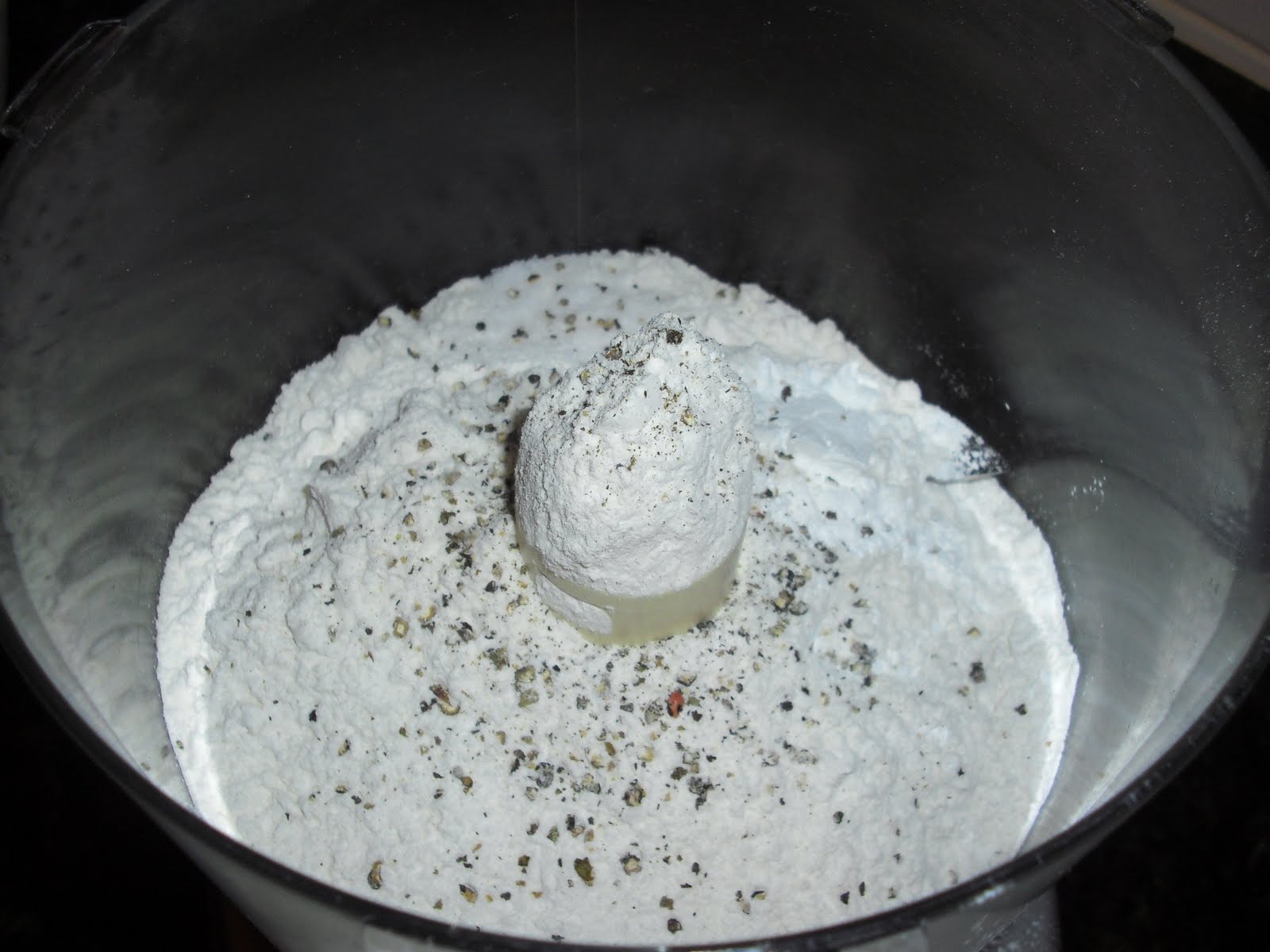
Add the flour, baking powder, salt, and pepper in the food processor, and pulse to blend. Add the cold butter to the processor. Pulse the mixture until the butter is the size of peas. NB: Because I like my biscuits extra flaky, and the melting cubes of butter is what provides this texture in the finished biscuit, I leave my pieces of butter a little bigger in my biscuits than I would in say, pie dough.


Transfer the flour mixture to medium bowl.

Add buttermilk mixture and stir until a dough forms.


Scoop dough out onto a lightly floured work surface and use your hands to press it out to 7x7 inch square about 1/2 inch thick. Cut the dough into squares. This doesn’t have to be super precise, and you can use a biscuit or cookie cutter if you want. I got 8 biscuits of about the same size.


Transfer biscuits to a baking sheet. Brush the biscuit tops with some of the egg glaze, this will make them brown and glow nicely. Sprinkle with cracked coriander seeds.*

Bake the biscuits until golden brown, about 20 minutes. Cool on a rack.


I decided to bring the biscuits to the next level, so I split them in half and topped them with scallion cream cheese and pieces of smoked salmon. They were awesome. You could also do little biscuit sandwiches with ham. And of course they're good plain, hot, and crumbly, straight from the baking sheet.

*The best way to crack coriander is to put the seeds in a ziplock bag, place the bag on a cutting board, or the floor, and pound them lightly with a rolling pin. See below.


Eggplant with Buttermilk-Thyme Dressing
Adapted from Vegetable Harvest by Patricia Fields


I adore eggplant. I am unequivocally in favor of any recipe in which a vegetable gets to be the main ingredient. (Luckily Patricia Fields has written entire book of recipes that do just this; see above.) Though eggplant may be the meat (bad-da-ching) of this recipe, the flavor is in the dressing. Thyme is the perfect herb here; it stands its lemony ground but doesn’t overwhelm. The buttermilk is important because it’s rich enough to smooth over the spiciness when you get a bite of the raw garlic. Also, don’t you hate it when you drizzle a dressing over a vegetable and it sits there stodgily, making it so you don’t get dressing with every bite? Not the case here: this dressing is light, with just enough body to coat the eggplant evenly. Feel free to try it on other veggies or a salad. I know I will.

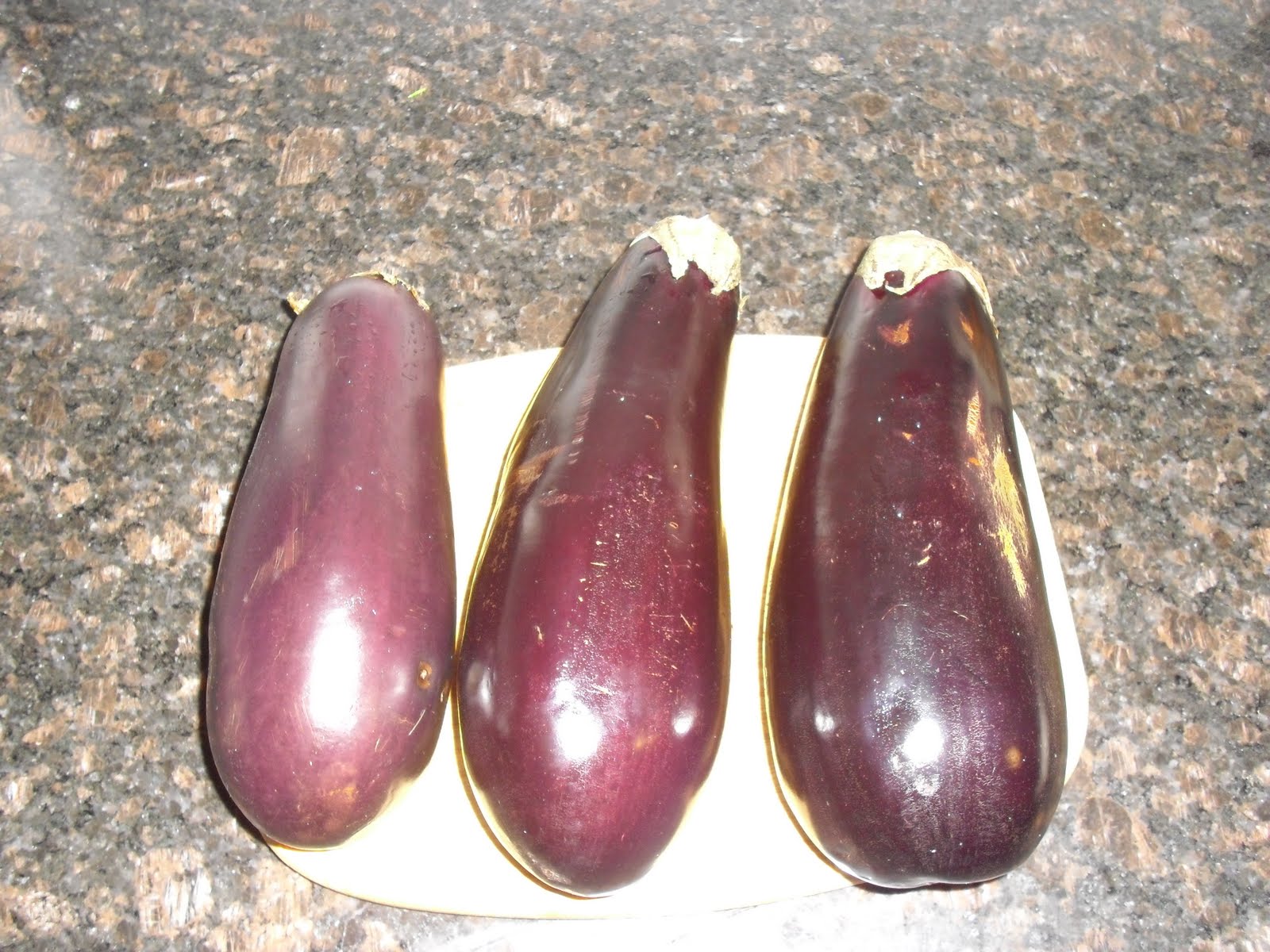
2 to 3 Japanese eggplants (these are the long, smaller type, not the big, fat, Italian type)
3 large cloves garlic, minced
for dressing:
½ teaspoon sea salt
2 teaspoons extra virgin olive oil
1 tablespoon mustard (preferably a smooth Dijon)
1 teaspoon fresh thyme leaves
½ cup buttermilk

To make the dressing, combine the salt, olive oil, mustard, thyme and buttermilk in a small jar. I had a mason jar, but you can also use an old jam or mayo jar, or to be honest, just put the ingredients in a bowl and stir energetically, but then you miss out on the fun of shaking it. Cover the jar and shake the ingredients to blend. Let the dressing sit for an hour in the fridge to allow the flavors to blend.


Cut the eggplant into long strips, and then cut those strips in half, so that your eggplant looks like thick-cut fries. This is honestly a matter of preference though, and you could cut it into cubes and be done with it.


Bring about 2 cups of water (depending on the size of your steamer) to a simmer in the bottom of your steamer. Place the eggplant on the steaming rack, cover, and steam until the eggplant is soft and cooked through, about 15 minutes. Again, cooking time will vary with the size of your steamer, and the size of your eggplant pieces, so check the eggplant at about 10 minutes to see if it’s done. Also, if you wanted, you could just sauté the eggplant in a pan with a tablespoon of olive oil.


When the eggplant has cooked, transfer the pieces to a platter or serving bowl. Sprinkle the garlic over the eggplant, season with salt, and then drizzle over 2 TBSP or so of the buttermilk-thyme dressing. It’s up to you how saucy you like your vegetables. I found a few tablespoons of the dressing went a long way! Gently toss the eggplant to coat it, and serve warm.

yum.